

Welcoming our friends from The David Lin Report.
This is our latest newsletter alongside Gold related clips from TDLR.
STLLR News

Email Subscription
Subscribe to STLLR new releases and newsletter for regular updates and information

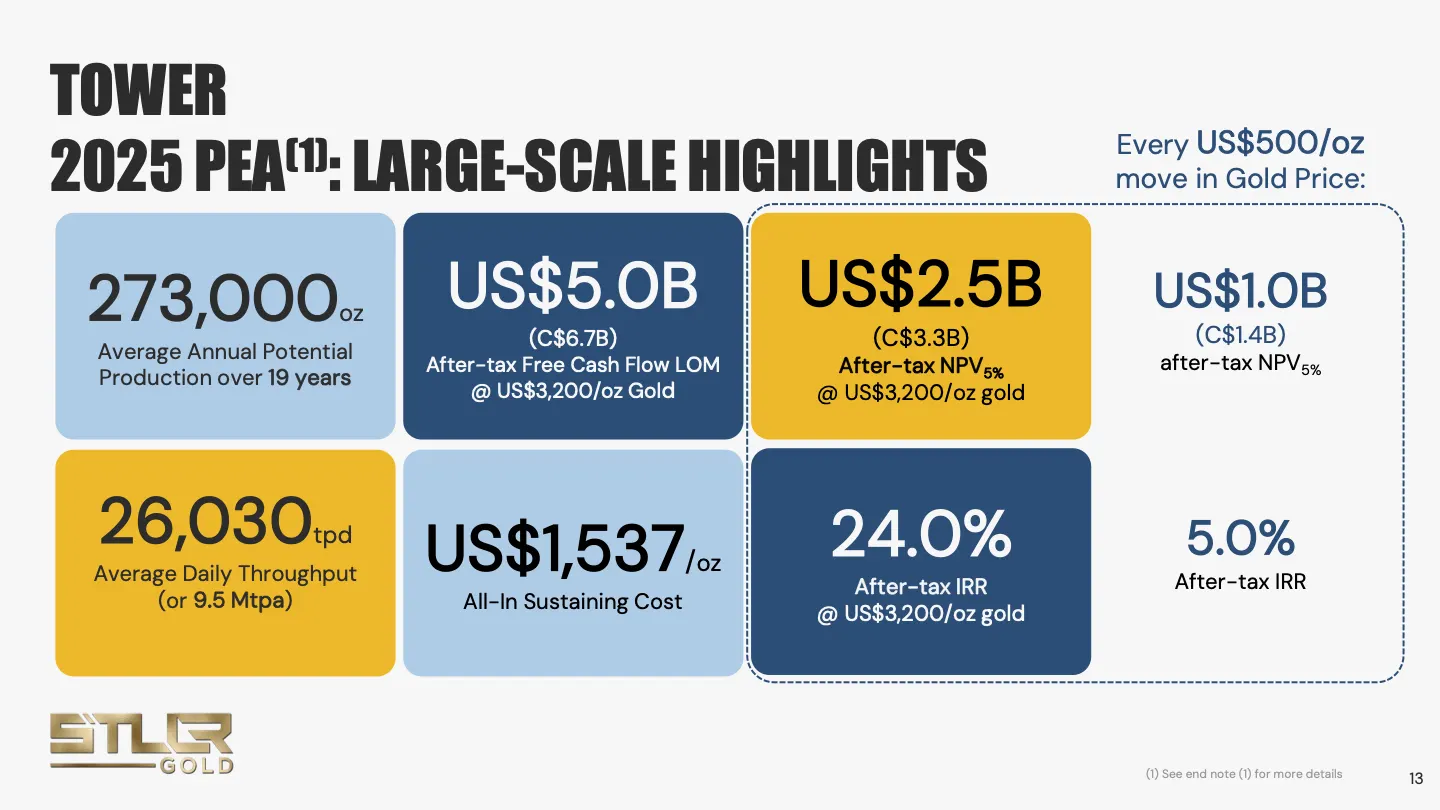
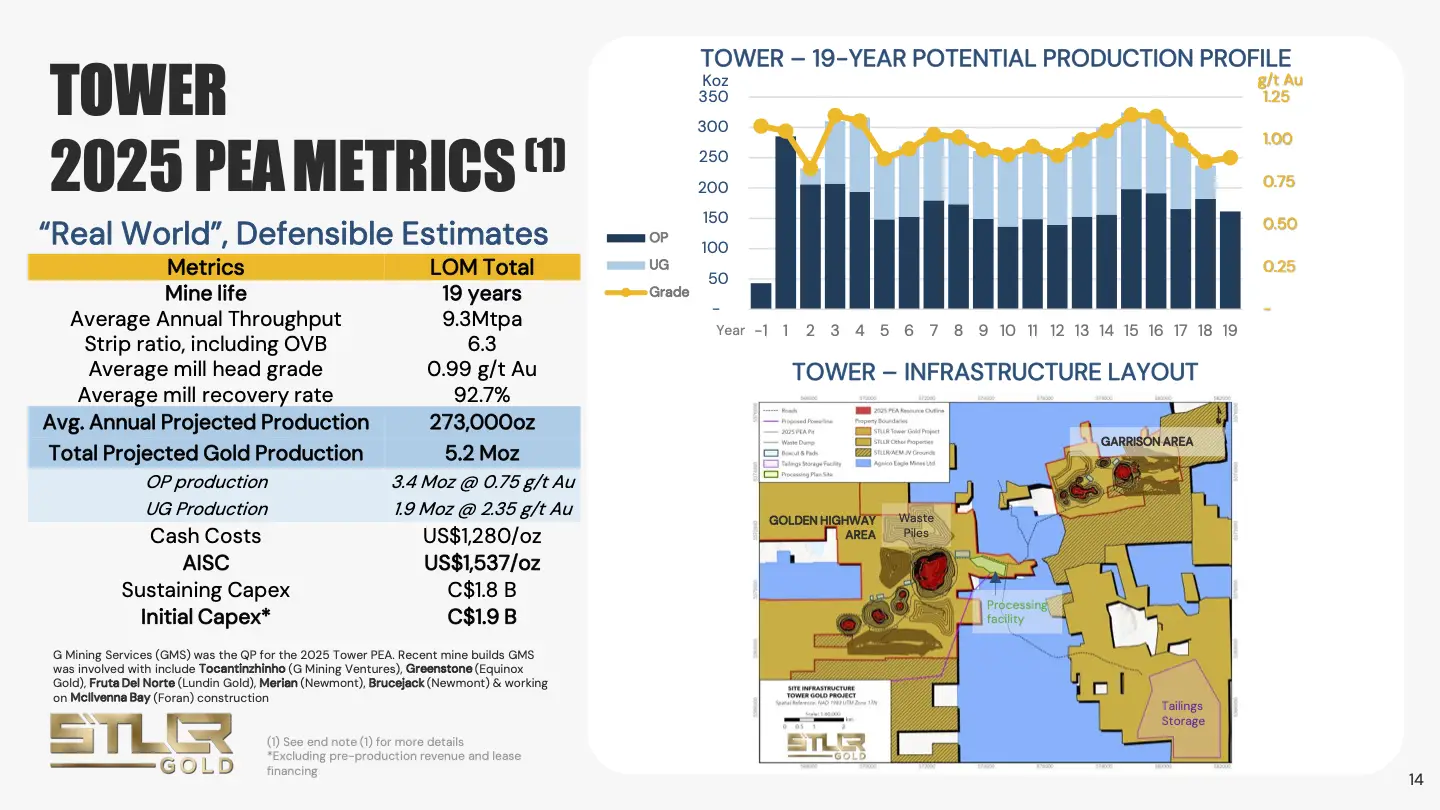
2025 PEA HIGHLIGHTS
TOWER GOLD PROJECT
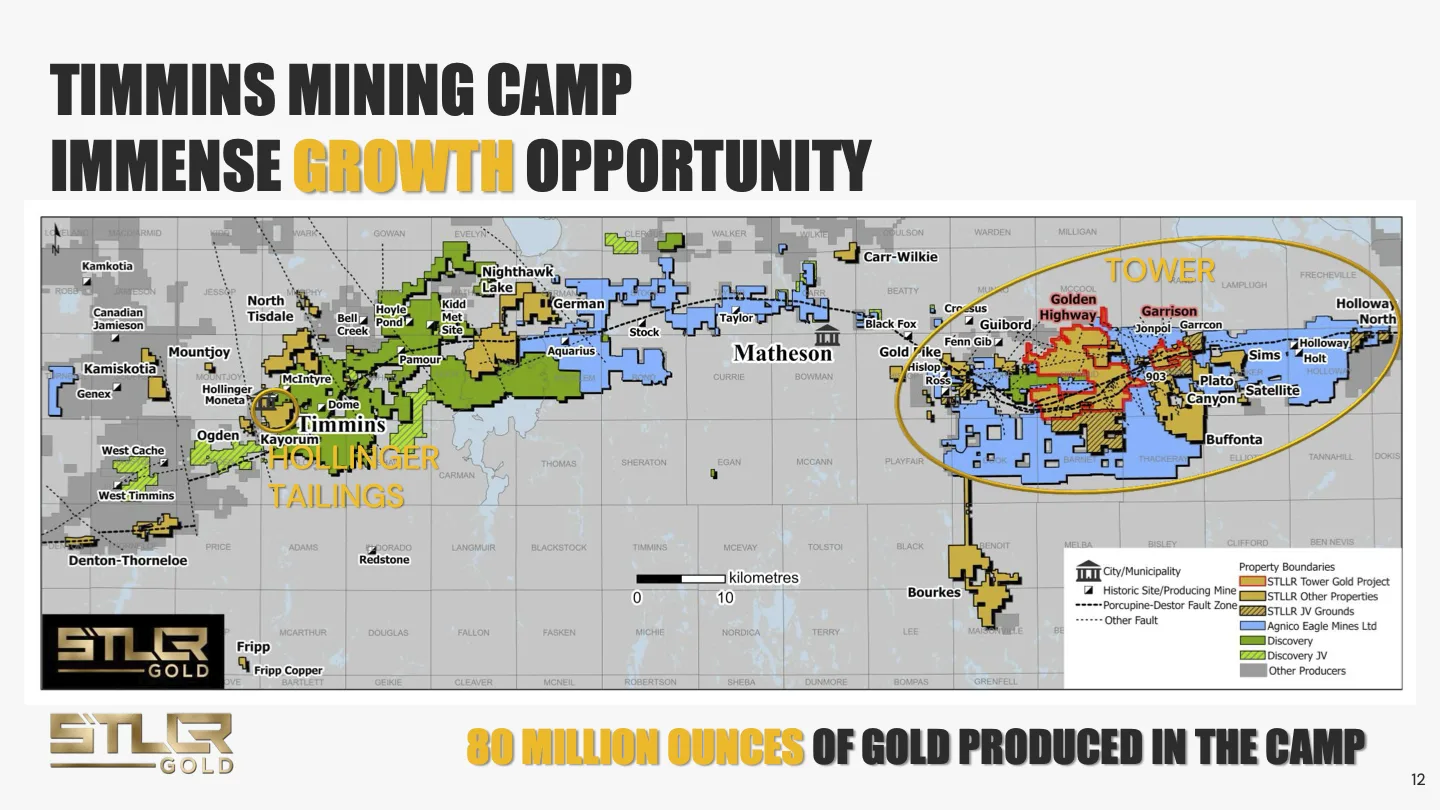
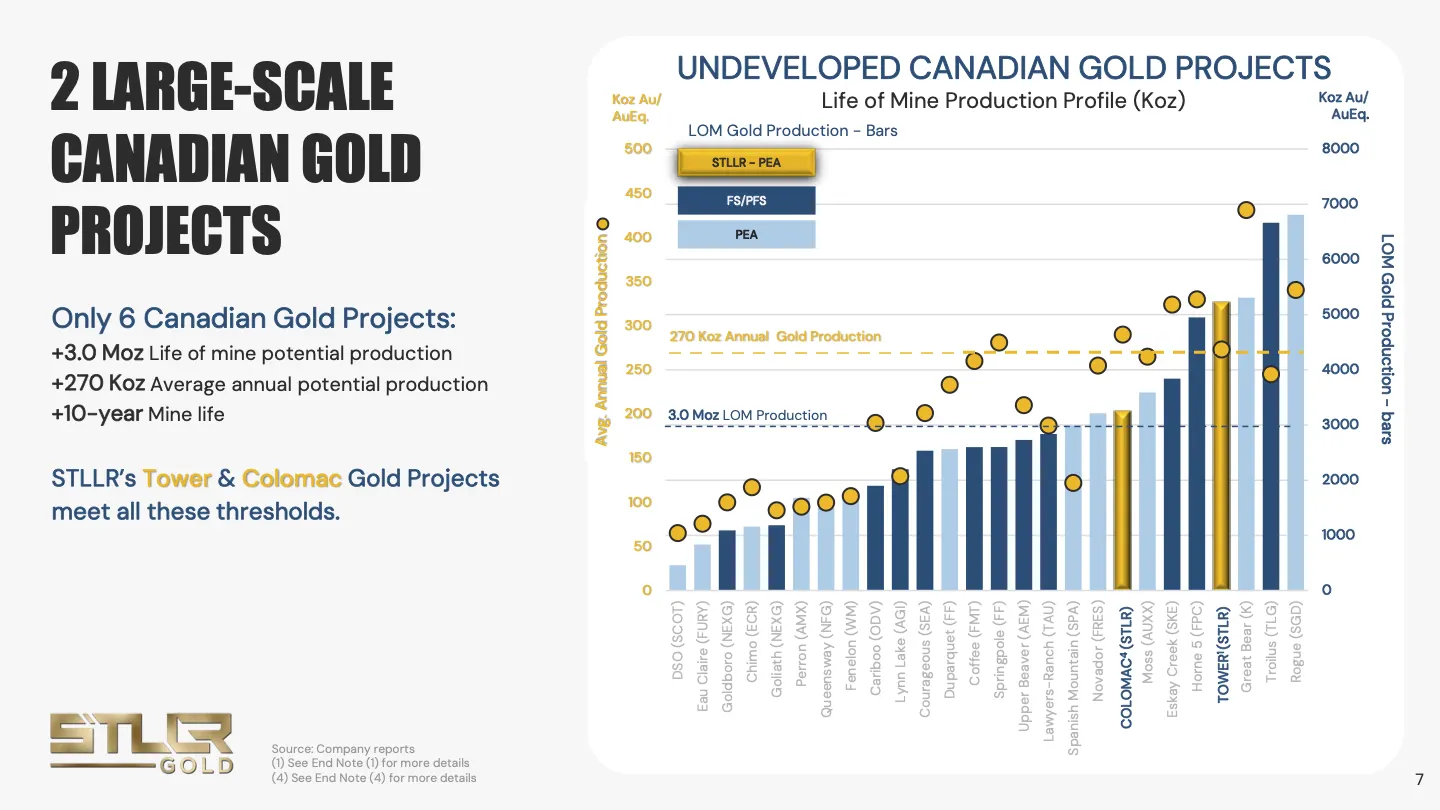
STLLR's flagship asset in the renowned Timmins Mining Camp and one of the largest undeveloped gold projects in Canada. |
ARTICLES
Gold Commentary

Gold Market
Gold staged a strong recovery in August 2026, reversing much of the weakness seen in June and July. The metal rose from approximately US$4,030/oz at the beginning of the month to a high near US$4,697/oz, before easing toward US$4,450/oz at month-end, representing a monthly gain of roughly 9%–10%. The rally marked an important technical shift as gold broke through the key US$4,200/oz resistance level, supported by softer U.S. economic data, renewed ETF inflows, continued central bank buying, fiscal concerns and geopolitical uncertainty. Some gains were surrendered late in the month as more hawkish Federal Reserve commentary pushed Treasury yields higher and renewed expectations for tighter monetary policy. Despite the pullback, gold finished August well above July levels, highlighting resilient underlying investment demand and an improved market outlook.
Influencing Factors
Gold’s August rally was driven by:
Softer U.S. economic data: Weaker economic indicators early in the month reduced confidence that the Federal Reserve would need to continue raising rates aggressively. This supported expectations for less restrictive monetary conditions and helped gold break out of its July trading range.
ETF investment demand: Gold ETF flows strengthened sharply during August. Renewed institutional investment provided an important source of momentum and helped push gold toward US$4,400/oz during the first half of the month.
Central bank demand: Continued official-sector purchases remained an important structural support. Central banks bought a net 289 tonnes during Q2 2026, while the World Gold Council’s survey found that 89% of reserve managers expect global central bank gold holdings to increase over the next year.
U.S. dollar movements: Periods of dollar weakness improved gold’s attractiveness to international buyers and supported the August rally. Conversely, renewed dollar strength late in the month limited further upside.
Geopolitical uncertainty: Continuing conflict in the Middle East and renewed U.S.–Iran tensions maintained demand for safe-haven assets. However, rising oil prices simultaneously increased inflation concerns, creating a more complicated relationship between geopolitical risk and gold.
Fiscal and sovereign-debt concerns: Growing concern over U.S. government debt and fiscal sustainability encouraged demand for so-called “debasement trades,” including gold, as investors sought assets perceived as protection against currency depreciation and long-term fiscal instability.
Federal Reserve expectations: Monetary policy was supportive early in the month as softer economic data reduced expectations for additional tightening. However, the tone shifted following Jackson Hole, where hawkish comments pushed Treasury yields higher and triggered profit-taking in gold.
Asian physical demand: Demand conditions in India improved as consumers responded to more stable prices early in August and jewellery retailers replenished inventories ahead of the festive season. Investment demand through ETFs, bars and coins also remained relatively resilient.
Technical Analysis
Price Range and Key Levels
Gold traded in a wider range during August, rising from approximately US$4,020/oz to nearly US$4,700/oz. The move reflected a return of volatility and stronger bullish momentum.
The key technical development was the breakout above the US$4,100–US$4,200/oz resistance zone. Once US$4,200 was cleared, buying accelerated and gold moved quickly higher.
Major support: US$4,400–US$4,450/oz
Holding this range would keep the August breakout intact.Secondary support: US$4,300–US$4,350/oz
Former resistance that could attract buyers during a pullback.Structural support: US$4,180–US$4,200/oz
A break below this level would weaken the bullish technical outlook.Initial resistance: US$4,600–US$4,650/oz
A move back above this range would signal renewed buying momentum.Major resistance: US$4,695–US$4,700/oz
A breakout above the August high could open the door toward US$4,800/oz.Longer-term resistance: US$5,000/oz
The next major psychological level if bullish momentum continues.
Trend and Momentum
August marked a clear improvement in gold’s short-term technical trend.
Gold shifted from the lower highs seen in June and July to a pattern of higher highs and higher lows.
Prices progressed from roughly US$4,050 → US$4,250 → US$4,400 → US$4,600 → US$4,700, reflecting strong bullish momentum.
The breakout above US$4,200 was particularly important, as this level had capped gains throughout July.
Momentum became stretched as gold approached US$4,700, increasing the potential for profit-taking and short-term consolidation.
The late-August pullback appears to be a momentum reset rather than a reversal of the broader recovery.
Holding above US$4,400 would help maintain the positive short-term technical outlook.
Breakout Attempts
August was notably different from July because several important breakout attempts were successful.
Breakout Above US$4,200
Gold's first major breakout occurred when prices decisively cleared the US$4,200 resistance area during the opening week of August.
The breakout was followed by strong follow-through buying, confirming that the move represented more than a temporary intraday breach.
Breakout Above US$4,400
Gold subsequently pushed through US$4,400 during mid-August as ETF inflows strengthened and softer economic data reduced expectations for additional Federal Reserve tightening.
The World Gold Council specifically highlighted gold's move toward US$4,400/oz and attributed the rally partly to softer U.S. data, stronger ETF flows and continuing central bank demand.
Breakout Above US$4,500
The move above US$4,500 represented another important momentum signal. Once this level was cleared, gold quickly moved toward US$4,600–US$4,700.
Failed Breakout Near US$4,700
Gold's strongest rally encountered resistance immediately below US$4,700/oz.
Prices reached approximately US$4,697 before sellers emerged and profit-taking increased.
The failure to establish a sustained close above US$4,700, combined with hawkish Federal Reserve commentary, triggered a meaningful correction toward the US$4,400s.
The US$4,700 level therefore becomes one of the most important resistance areas entering September.
Volatility and Consolidation
Volatility increased considerably during August.
Early in the month, gold broke out of the relatively narrow US$4,000–US$4,200 range that had dominated July. Once this consolidation ended, daily price movements became substantially larger.
Several sessions produced movements exceeding US$100/oz, particularly during the second half of August. For example, gold moved more than 4% higher on August 19 before continuing above US$4,600 later in the week.
This increase in volatility reflected:
Rapidly changing Federal Reserve expectations.
Softer U.S. economic data.
ETF inflows.
Geopolitical developments.
Treasury-yield movements.
U.S. dollar fluctuations.
Momentum-driven investor positioning.
The late-August retreat from approximately US$4,700 toward US$4,450 may now lead to another period of consolidation.
A potential new trading range between approximately US$4,400 and US$4,700/oz could develop as investors reassess the outlook for inflation, interest rates and economic growth.
A sustained move outside this range would provide the clearest signal of gold’s next directional move.
Conclusion
Gold successfully broke above the US$4,200 resistance level that had constrained prices throughout July and subsequently established a series of higher highs and higher lows. The advance toward US$4,700 demonstrated renewed investor confidence and confirmed that demand had returned following the sharp correction experienced earlier in the year.
The late-August decline does not yet invalidate the bullish structure. Instead, it appears consistent with profit-taking and a technical correction following a rapid rally.
A sustained hold above US$4,400/oz would keep the August breakout intact and support another attempt at US$4,600–US$4,700/oz.
A decisive break above US$4,700 could open the door toward US$4,800 and potentially US$5,000.
Conversely, a sustained decline below US$4,400 would increase the likelihood of a deeper retracement toward US$4,300–US$4,350. A move back below US$4,200 would represent a more meaningful deterioration in the technical picture.
Outlook
Short-Term Projections (2026)
The outlook for gold through the remainder of 2026 remains constructively bullish, although elevated volatility is likely to continue. August materially improved the technical and fundamental picture following the sharp correction in the second quarter and the consolidation experienced during July. Gold's ability to rebound from approximately US$4,000/oz and briefly approach US$4,700/oz demonstrated that investment demand can return quickly when monetary, fiscal and geopolitical conditions become supportive.
For the remainder of the year, monetary policy is likely to remain one of the most important influences on gold. Softer economic growth, declining inflation, lower real yields or a weaker U.S. dollar would provide a favourable environment for further gains. Conversely, persistent inflation and additional Federal Reserve tightening could keep Treasury yields elevated and place renewed pressure on gold.
Central bank purchases should continue to provide underlying support, while renewed ETF inflows and Asian investment demand could provide additional upside momentum. Geopolitical uncertainty, rising sovereign debt and concerns surrounding long-term fiscal sustainability are also likely to reinforce gold's appeal as a defensive asset and store of value.
Bullish Factors
Continued central bank reserve diversification, renewed ETF inflows and strong Asian investment demand remain important sources of support. A weaker U.S. economy or moderation in inflation could reduce pressure on the Federal Reserve to maintain restrictive monetary policy, potentially lowering real yields and supporting gold. Geopolitical uncertainty and growing concerns surrounding government debt and fiscal deficits should also remain supportive of safe-haven and portfolio-diversification demand.
Bearish Factors
The principal downside risk remains higher-for-longer interest rates. Persistent inflation could encourage the Federal Reserve to maintain or increase restrictive policy, supporting Treasury yields and the U.S. dollar. Stronger-than-expected economic growth could have a similar effect. Profit-taking following August's sharp rally, weaker ETF flows, easing geopolitical tensions and reduced jewellery demand at historically high prices could also limit further upside.
Technical Outlook
Gold enters September with US$4,400–US$4,450/oz representing an important initial support area, followed by approximately US$4,300–US$4,350/oz. The former breakout area around US$4,180–US$4,200/oz represents more significant structural support and would be an important level to monitor during any deeper correction.
On the upside, resistance is concentrated around US$4,600–US$4,700/oz. A sustained break above the August high near US$4,700/oz would reinforce bullish momentum and could open the door toward US$4,800/oz, followed by the psychologically important US$5,000/oz level.
Overall, the short-term bias remains moderately bullish while gold holds above its major August breakout levels. However, investors should expect substantial volatility around inflation releases, employment data, Federal Reserve decisions and geopolitical developments.
Medium-Term Projections (2027–2030)
The medium-term outlook for gold remains positive, supported by several structural trends that extend beyond the current interest-rate cycle. Central bank reserve diversification, elevated sovereign debt, geopolitical fragmentation, persistent investment demand and constrained growth in mine supply all provide a favourable backdrop.
Central bank demand is particularly important. Reserve managers have accumulated gold at historically elevated rates in recent years as many countries seek greater diversification within their foreign-exchange reserves. This trend is expected to continue, particularly among emerging-market economies seeking to reduce concentration risk and increase holdings of assets without credit or counterparty exposure.
Fiscal conditions could provide another important source of support. Government debt and deficits remain elevated across many major economies, increasing investor concern surrounding long-term fiscal sustainability and currency purchasing power. Gold may continue to benefit as investors seek assets that are independent of individual governments and monetary systems.
Supply conditions are also expected to remain relatively supportive. Although elevated gold prices may encourage additional exploration, mine development and recycling, new mines require substantial capital and lengthy permitting and construction timelines. Large, high-quality discoveries have also become increasingly difficult to identify, limiting the ability of mine supply to respond rapidly to higher prices.
Positive Drivers
The strongest medium-term drivers are expected to include continued central bank accumulation, elevated sovereign debt, geopolitical fragmentation, Asian investment demand and potential normalization of real interest rates. Constrained mine supply, rising development costs and continued institutional portfolio diversification could further reinforce these trends.
Risks
The principal risks include persistently high real interest rates, sustained U.S. dollar strength, stronger and more stable global economic growth and a meaningful reduction in geopolitical uncertainty. Reduced central bank purchases or weaker institutional investment demand could also weigh on prices. Sustained high gold prices could eventually encourage greater recycling and new mine development while suppressing jewellery consumption.
Overall View
Medium-term fundamentals remain constructive, although gold's upward path is unlikely to be linear. Significant corrections should be expected even within a broader bullish cycle. Central bank and institutional demand may provide increasingly important support during major pullbacks, while constrained supply could amplify price movements when investment demand strengthens.
Gold therefore has the potential to revisit or exceed its early-2026 record before 2030, particularly if monetary conditions become less restrictive, fiscal concerns increase or global investment demand continues to expand.
Long-Term Projections (Beyond 2030)
Looking beyond 2030, gold's strategic importance within the global financial system is expected to remain significant. A more multipolar economic and monetary environment, combined with elevated sovereign debt and geopolitical fragmentation, could encourage both central banks and private investors to maintain larger allocations to assets that are independent of individual governments and currencies.
Gold's scarcity, liquidity, global acceptance and absence of credit or counterparty risk provide characteristics that are difficult to replicate. These qualities are likely to support its continued role as a reserve asset, portfolio diversifier and long-term store of value.
Central bank diversification could become particularly important over the longer term. As emerging economies increase their share of global economic activity, reserve portfolios may become more diversified, potentially increasing gold's strategic allocation within the international monetary system.
Long-term supply constraints could provide additional support. New gold discoveries have become increasingly difficult and expensive, while permitting, construction and development timelines continue to lengthen. Even if high prices encourage additional investment, global mine production may respond relatively slowly.
Structural Tailwinds
The primary long-term supports include central bank reserve diversification, rising sovereign debt, persistent fiscal deficits, geopolitical fragmentation, constrained mine supply and increasing emerging-market wealth. Gold's role as an asset without credit risk should also remain valuable during periods of monetary, political or financial instability.
Potential Challenges
Long-term risks include a sustained period of high real interest rates, persistent U.S. dollar strength, improved global fiscal discipline and reduced geopolitical uncertainty. Strong long-term equity-market performance or greater competition from alternative stores of value could also reduce investment allocations to gold.
Long-Term View
Gold is expected to remain one of the world's leading stores of value beyond 2030. Central banks and institutional investors are likely to remain important sources of demand, while private investors should continue to use gold for portfolio diversification and protection against financial-system risks.
Long-term appreciation is unlikely to occur in a straight line. Periods of rapid gains will likely continue to alternate with substantial corrections and extended periods of consolidation. Nevertheless, the structural factors supporting gold suggest that its strategic importance should remain intact over the coming decades.
Summary
Gold enters the final months of 2026 in a considerably stronger position than it did at the end of the second quarter. The August rally from approximately US$4,000/oz toward US$4,700/oz demonstrated renewed investor demand and materially improved the technical picture following the June correction and July consolidation.
In the short term, the ability to hold above approximately US$4,400/oz would support the continuation of the recovery, while a sustained break above US$4,700/oz could create a path toward US$4,800 and potentially US$5,000/oz. Conversely, renewed monetary tightening and rising real yields remain important risks and could produce another meaningful correction.
Looking further ahead, the medium- and long-term outlook remains constructive. Central bank reserve diversification, persistent fiscal deficits, elevated sovereign debt, geopolitical uncertainty, institutional investment demand and constrained mine supply provide a strong structural foundation for gold. While significant corrections and periods of consolidation should continue to be expected, gold is likely to maintain an important role as a store of value, strategic reserve asset and portfolio diversifier through the remainder of the decade and beyond.
Gold on Socials
Interesting Posts on X.com



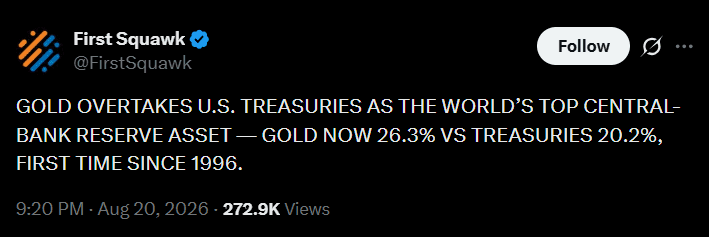

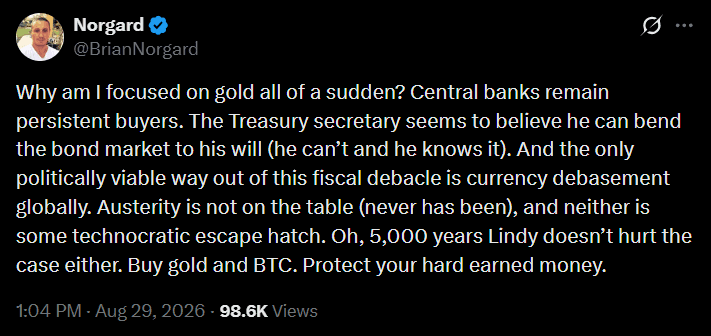

Price Performance & Forecast
Price Performance Charts:
Since January 1/20, 1-Year, 3-Month, 1-Month
Gold Price vs. S&P 500 vs. Nasdaq vs. Dow Jones ending August 31, 2026
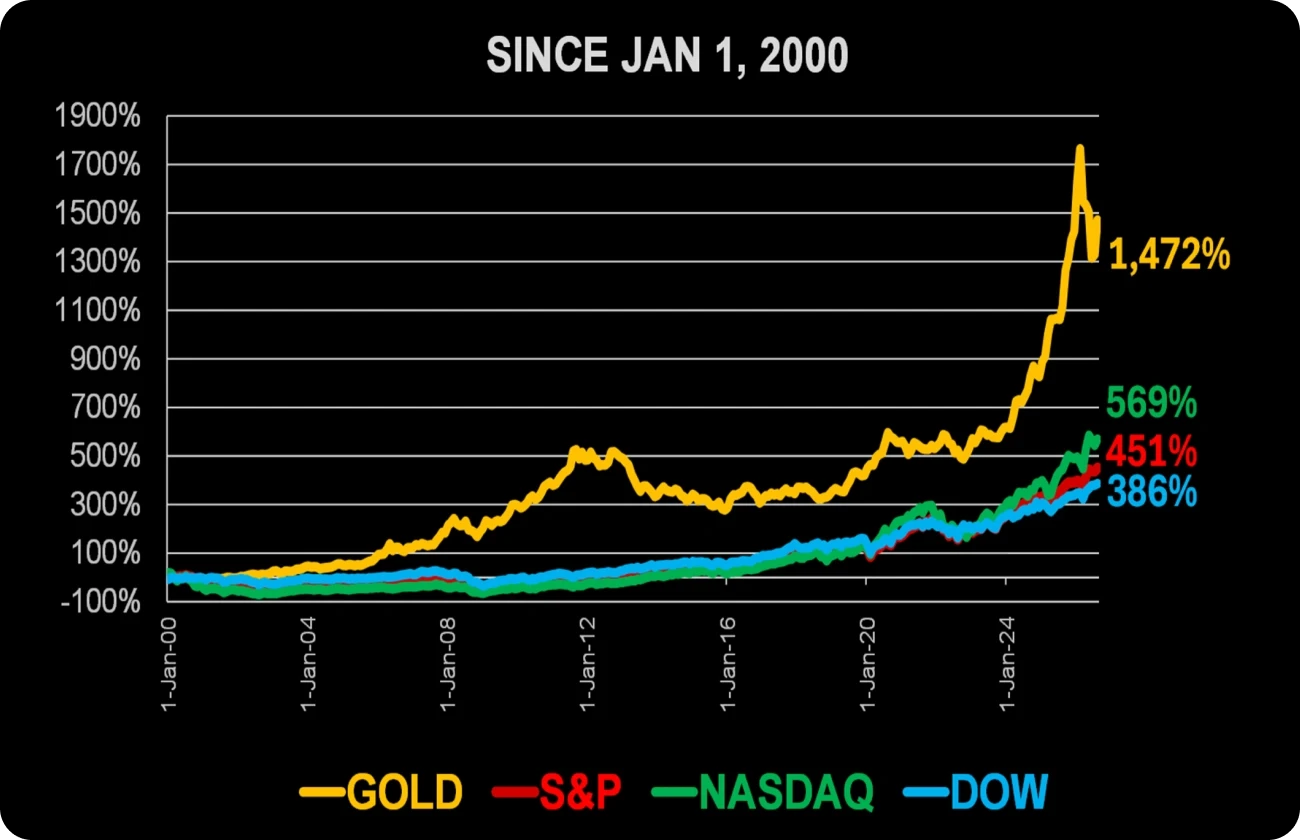
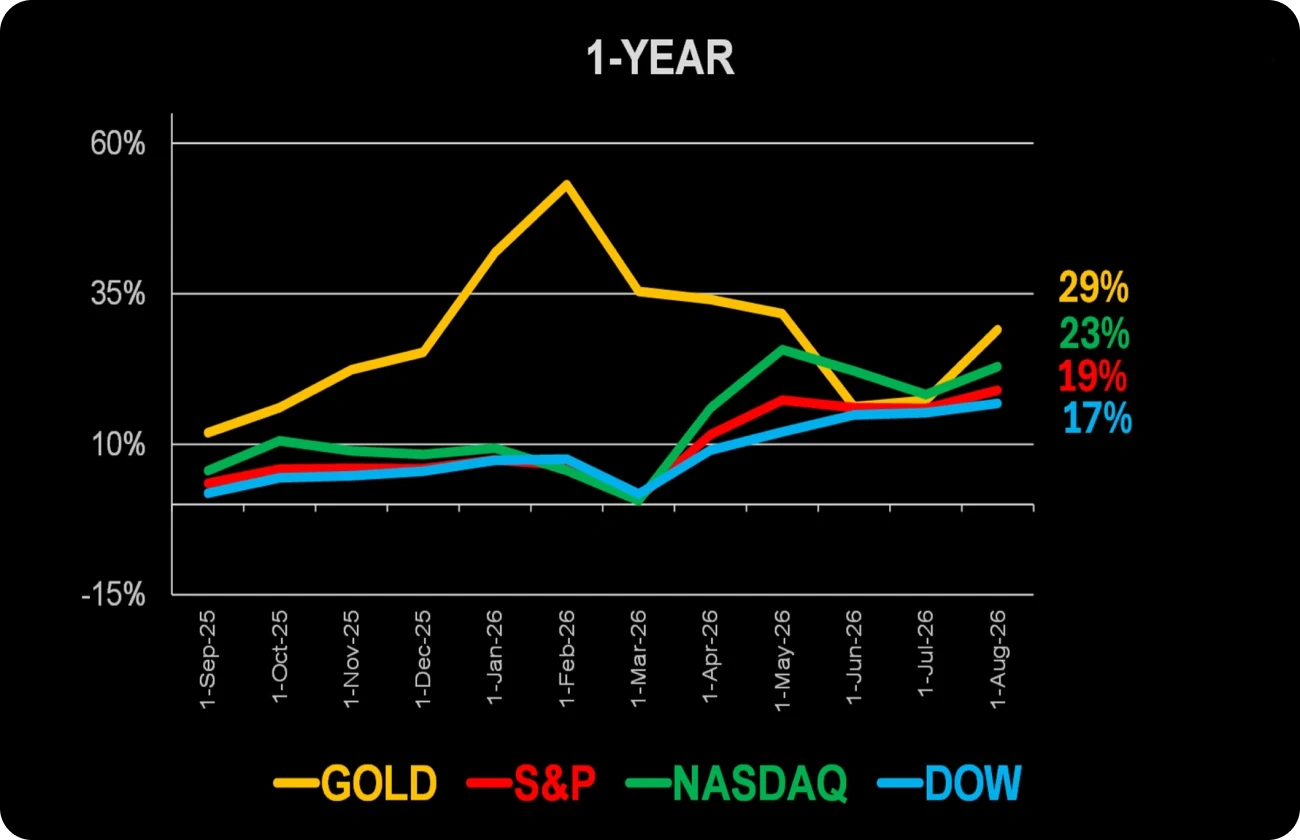


(Source: WGC, STLLR Estimates, TradingView)
STLLR Management Share Purchases
We have Skin in the Game! |


Gold Price Performance Per Currency
Currency
Aug-26
1-Year
USD
+8.2%
+31.1%
Euro
+6.7%
+31.8%
JPY
+6.0%
+41.3%
GBR
+7.0%
+30.3%
CAD
+6.7%
+32.2%
CHF
+7.9%
+31.4%
INR
+7.4%
+53.7%
CNY
+7.6%
+23.2%
TRY
+10.0%
+53.7%
SAR
+8.3%
+31.2%
IDR
+7.1%
+43.3%
AED
+8.2%
+31.1%
THB
+6.7%
+33.5%
VND
+7.7%
+30.5%
EGP
+8.3%
+36.0%
KRW
+2.2%
+32.6%
RUB
+15.8%
+36.2%
ZAR
+6.3%
+19.8%
AUD
+6.2%
+20.0%
(Source: WGC, Goldprice.org)
STLLR Company Presentation - Energy & Precious Metals Virtual Investor Summit with Allan Candelario, VP, Investor Relations & Corporate Development
June 2026

STLLR Company Presentation - THE Mining Investment Event, Quebec City 2026 with Salvatore Curcio, CFO
June 2026

STLLR Company Presentation at Deutsche Goldmesse in Frankfurt with Allan Candelario, VP, Investor Relations & Corporate Development
May 2025

Events Calendar
CONNECT WITH US
Let’s Start a Conversation
We value open communication with our investors. Connect with us through social media or reach out directly:

Email Subscription
Subscribe to STLLR new releases and newsletter for regular updates and information


Follow us on social networks and expect further announcements
Fill out the form below to start your journey with STLLR Gold.
Our team is ready to assist you.